
What exactly is an NFT?
NFT’s have gotten a lot of hype lately. But what exactly is an NFT? Let’s break it down.
NFT stands for “Non-fungible Token.” This can be considered a digital asset.
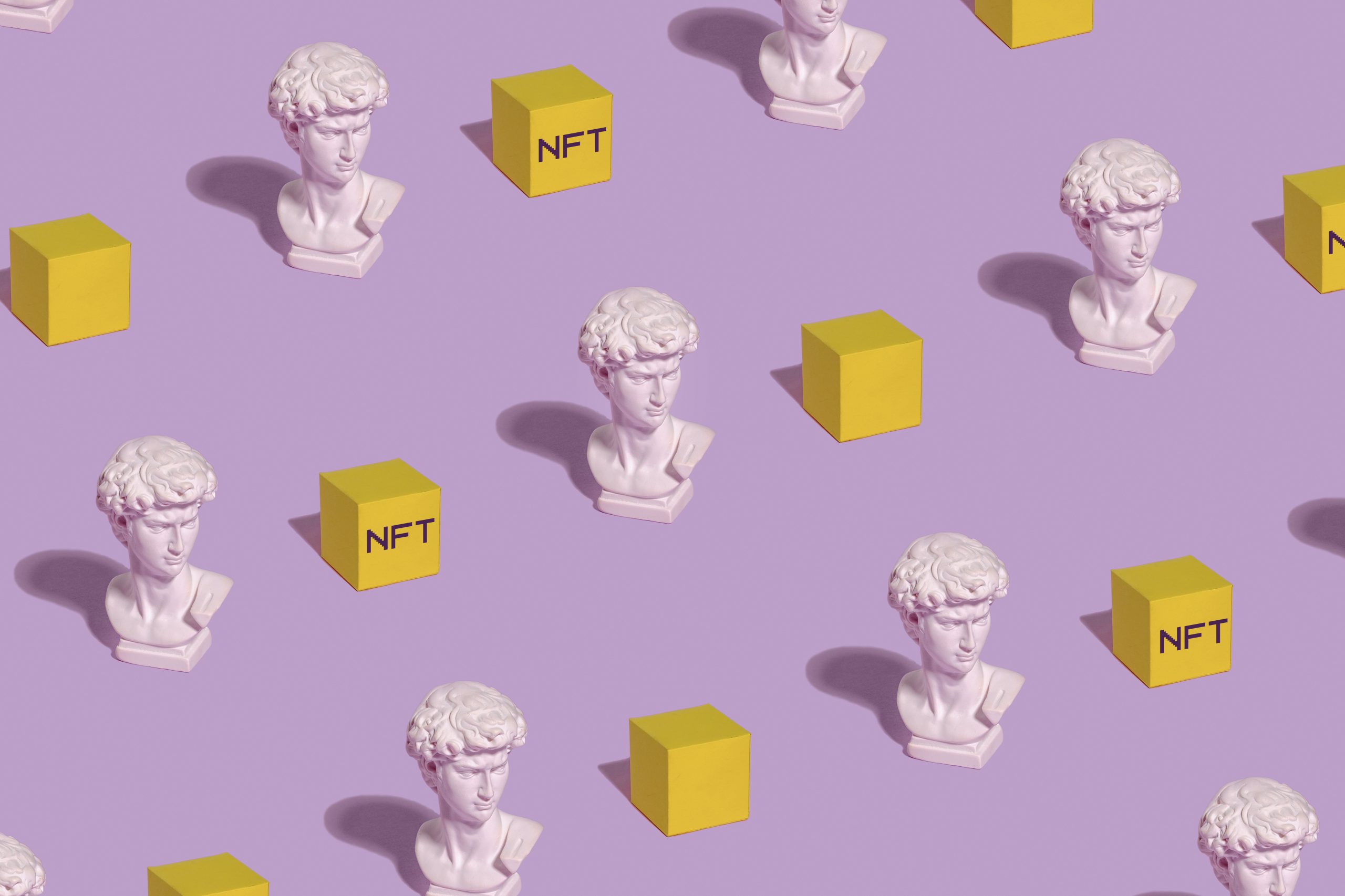
The word “fungible” means something that can be traded for something else of equal value. So, in this case “non-fungible” means that there is not something with equal value. There is only one uniquely like it. Many of the world’s most valuable items such as the Mona Lisa or the Statue of David are considered “non-fungible.” There is only one.
When we look on the other hand, for example, we have cryptocurrencies, such as Bitcoin, which are “fungible” tokens, meaning each Bitcoin has the same value, therefore one Bitcoin can easily be traded with another Bitcoin. When you have an NFT, it can be bought and sold but there is nothing that is of equivalent value that could easily be traded with it.
Then we have the word “token.” Being a token means it is unique and there is nothing like it. When something is tokenized that means it’s attached to a digital certificate of ownership, and is uniquely its own thing.
What is the blockchain?
In order to better understand how NFT’s work, it is important to have an understanding of the blockchain as well.
A blockchain is a database that stores digital information chronologically. This is decentralized which means the control is spread out across different authorities instead of by one. This allows people to make transactions directly with each other instead of relying on a middleman such as a bank. Every transaction you make on the blockchain goes onto a public ledger so there is proof of whatever exchanges were made.
So, when you buy your NFT, you won’t have a physical asset proving ownership, but the proof of your ownership is recorded on the blockchain.
So why would you want an NFT anyway?
Just like any other collectible, your NFT might raise in value the longer you hold onto it. That means one day, you could potentially sell it and make money.
The other thing that NFTs sometimes have are “utilities.” These are special “real world” perks that come with your NFT. This could be access to events, discounts, special communities, etc. As a holder of that particular NFT, you have access to its utilities. You may not care about the digital asset itself, but you may want to hear your favorite media icon speak at a conference. It could give you that special opportunity.
Whatever your motive is, it’s definitely worth it to take advantage of this new form of collectibles.
Que es un NFT?
¿Qué es exactamente un NFT?
Los NFT han recibido mucha publicidad últimamente. Pero, ¿qué es exactamente un NFT? Vamos a desglosarlo.
NFT significa "token no fungible". Esto puede ser considerado un activo digital.
La palabra “fungible” significa algo que se puede intercambiar por otra cosa de igual valor. Entonces, en este caso, “NO fungible” significa que no hay algo con el mismo valor. Sólo hay uno único como él. Muchos de los artículos más valiosos del mundo, como la Mona Lisa o la Estatua de David, se consideran "no fungibles". Sólo hay uno.
Cuando miramos por otro lado, por ejemplo, tenemos criptomonedas, como Bitcoin, que son tokens "fungibles", lo que significa que cada Bitcoin tiene el mismo valor, por lo tanto, un Bitcoin se puede intercambiar fácilmente con otro Bitcoin. Cuando tiene un NFT, puede comprarlo y venderlo, pero no hay nada que tenga un valor equivalente que pueda intercambiarse fácilmente con él.
Luego tenemos la palabra "token". Ser un token significa que es único y no hay nada como eso. Cuando algo se tokeniza, eso significa que está adjunto a un certificado digital de propiedad y es únicamente propio.
¿Qué es el blockchain?
Para comprender mejor cómo funciona NFT, es importante comprender también la cadena de bloques (blockchain).
Una cadena de bloques es una base de datos que almacena información digital cronológicamente. Esto está descentralizado, lo que significa que el control se distribuye entre diferentes autoridades en lugar de una sola. Esto permite que las personas realicen transacciones directamente entre sí en lugar de depender de un intermediario como un banco. Cada transacción que realiza en la cadena de bloques se registra en un libro público, por lo que hay pruebas de los intercambios que se realizaron.
Entonces, cuando compre su NFT, no tendrá un activo físico que pruebe la propiedad, pero la prueba de su propiedad se registra en la cadena de bloques.
Entonces, ¿por qué querrías un NFT ?
Al igual que cualquier otro coleccionable, su NFT podría aumentar de valor cuanto más tiempo lo conserve. Eso significa que algún día, potencialmente podrías venderlo y ganar dinero.
La otra cosa que a veces tienen los NFT son "utilidades". Estos son beneficios especiales del "mundo real" que vienen con su NFT. Esto podría ser acceso a eventos, descuentos, comunidades especiales, etc. Como titular de ese NFT en particular, tiene acceso a sus utilidades. Es posible que no le importe el activo digital en sí, pero es posible que desee escuchar a su ícono de medios favorito hablar en una conferencia. Podría darte esa oportunidad especial.
Cualquiera que sea su motivo, definitivamente vale la pena aprovechar esta nueva forma de coleccionables.