
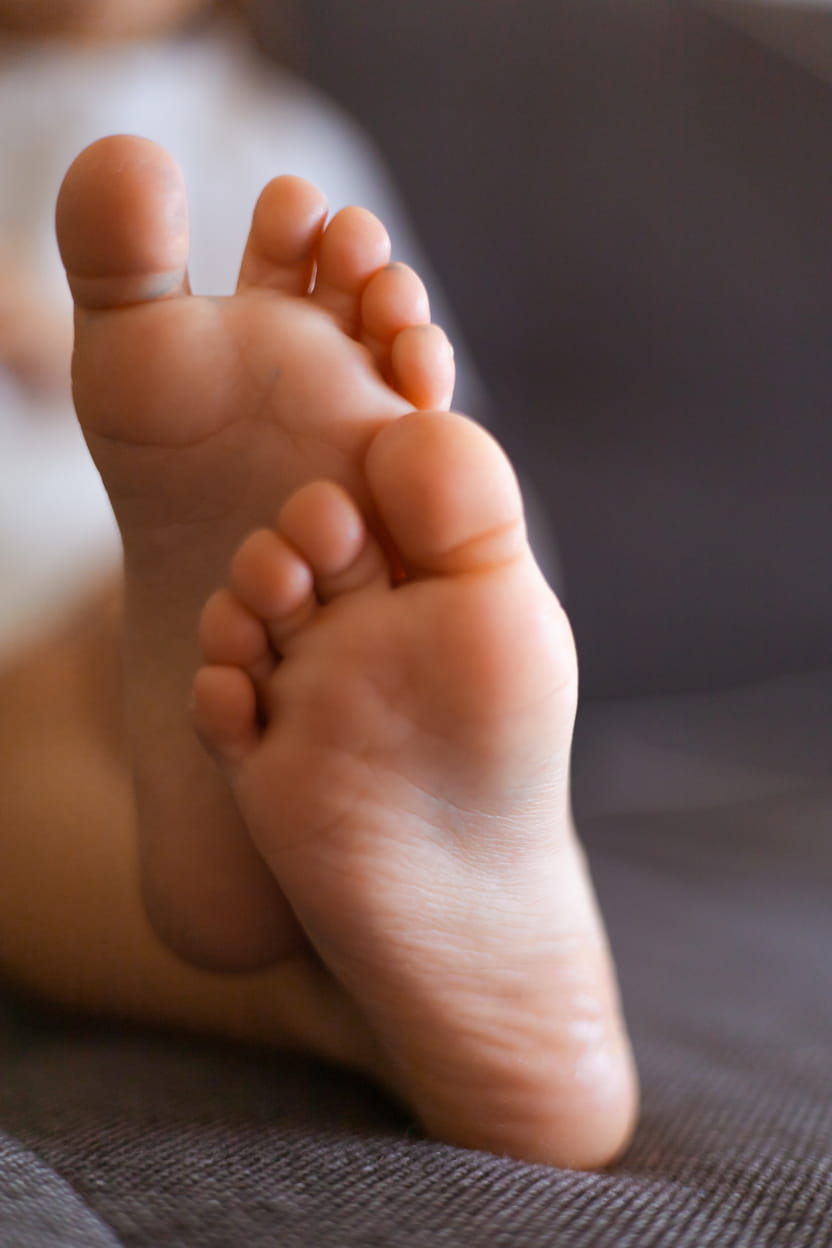
Un estudio muestra un aumento del pie plano en los niños que usan zapatos que en los que no.
Study shows increase of flat foot in children that wear shoes than those who don’t.

Barefoot Shoes and Bunions
If you’re suffering from bunions, wearing barefoot shoes may be the answer to your foot woes. Bunions are a common and painful condition in which the big toe joint becomes swollen and misaligned.
Wearing shoes that have too much cushioning can make this problem worse, as can high heels or tight-fitting footwear. That's why many people with bunions opt for barefoot shoes—they offer plenty of room for your toes to move naturally while still providing adequate protection against hard surfaces like pavement and concrete.
Barefoot shoes provide a number of benefits when it comes to managing bunions. First, they help promote natural foot movement by allowing your toes to spread out without restriction—this helps reduce pressure on the bunion area and provides relief from pain associated with the condition. Additionally, because there’s no arch support built into most barefoot shoes, they won't interfere with any orthotics you may need to wear. Finally, these types of footwear tend not to be very heavy so they won't place extra strain on already sore joints in your feet caused by bunions either.
In short, if you have bunions then investing in some quality barefoot shoes could make all difference when it comes to managing pain levels throughout the day. Not only do these types of shoe provide superior comfort but also encourage healthy foot movements that will help keep those pesky bunion problems at bay!

Zapatos descalzos minimalistas (barefoot shoes) y salud de los pies: un estudio de la rigidez del arco
El pie humano es una estructura notable y compleja que ha evolucionado durante miles de años para brindar estabilidad, equilibrio y movilidad. En los últimos años, la creciente tendencia de los zapatos descalzos ha dado lugar a un creciente cuerpo de investigación sobre las ventajas y desventajas de este tipo de calzado. Este artículo resume un estudio reciente que investigó los efectos del calzado moderno y el calzado minimalista en la biomecánica del pie humano. El estudio, que comparó la rigidez del arco de las personas que habitualmente usan calzado mínimo con aquellos que habitualmente usan zapatos modernos convencionales, encontró que las personas que usan calzado mínimo tienen arcos más rígidos tanto estática como dinámicamente. Los investigadores plantearon la hipótesis de que los zapatos modernos reducen el papel de los músculos del pie en el mantenimiento de la rigidez del arco, lo que puede provocar el colapso del arco y el pie plano en algunas personas. Por el contrario, los músculos del pie relativamente pequeños en personas con calzado convencional podrían estar relacionados con las características de sus zapatos que inmovilizan y protegen el pie, como puntera restrictiva y soportes elevados para el arco. Si bien estos hallazgos son intrigantes, los investigadores advierten que se necesita más investigación para confirmar la causalidad entre el calzado y la biomecánica del pie. La investigación futura debería centrarse en otros músculos del pie que se cree que están involucrados en el mantenimiento de la rigidez del arco, controlar los posibles factores de confusión, como la ascendencia genética y los niveles de actividad física, y determinar los efectos de las características específicas de los zapatos modernos en la biomecánica del pie. Además, se necesita más trabajo para determinar cómo el uso de zapatos modernos afecta la función del pie en diferentes etapas de desarrollo. A pesar de las limitaciones del estudio, los hallazgos respaldan la idea de que el pie humano no está completamente adaptado para los zapatos "convencionales" modernos y que el calzado descalzo o minimalista puede ser más beneficioso para la salud del pie. Si bien el uso de zapatos modernos en una etapa temprana de la vida puede aumentar el riesgo de pie plano, el uso de calzado mínimo más adelante en la vida puede ayudar a tratar los síntomas del pie plano al fortalecer los músculos del pie. En conclusión, el estudio proporciona más evidencia de la importancia de la biomecánica del pie y el impacto del calzado en la salud del pie. Si bien se necesita más investigación para comprender completamente la relación entre el calzado y la biomecánica del pie, los hallazgos de este estudio sugieren que el calzado descalzo o minimalista puede ser una opción más saludable para mantener la salud del pie y prevenir problemas en los pies. Citations: Holowka, N.B., Wallace, I.J. & Lieberman, D.E. Foot strength and stiffness are related to footwear use in a comparison of minimally- vs. conventionally-shod populations. Sci Rep 8, 3679 (2018). https://doi.org/10.1038/s41598-018-21916-7
[vc_row][vc_column][vc_column_text]
Barefoot Shoes and Foot Health: A Study of Arch Stiffness
The human foot is a remarkable and complex structure that has evolved over thousands of years to provide stability, balance, and mobility. In recent years, the growing trend of barefoot shoes has led to a growing body of research into the benefits and drawbacks of this type of footwear. This article summarizes a recent study that investigated the effects of modern shoes and minimal footwear on the biomechanics of the human foot.
The study, which compared the arch stiffness of individuals who habitually wear minimal footwear to those who habitually wear conventional modern shoes, found that individuals who wear minimal footwear have stiffer arches both statically and dynamically. The researchers hypothesized that modern shoes reduce the role of foot muscles in maintaining arch stiffness, which can lead to arch collapse and flat foot in some individuals. In contrast, the relatively small foot muscles in conventionally-shod individuals could be related to features in their shoes that immobilize and protect the foot, such as restrictive toe boxes and raised arch supports.
While these findings are intriguing, the researchers caution that more research is needed to confirm the causality between footwear and foot biomechanics. Future research should target other foot muscles thought to be involved in maintaining arch stiffness, control for potential confounding factors such as genetic ancestry and physical activity levels, and determine the effects of specific features of modern shoes on foot biomechanics. Additionally, further work is needed to determine how the use of modern shoes affects foot function at different stages of development.
Despite the limitations of the study, the findings support the idea that the human foot is not entirely adapted for modern "conventional" shoes and that barefoot or minimal footwear may be more beneficial for foot health. While the use of modern shoes early in life may increase the risk of flat foot, the use of minimal footwear later in life may help treat the symptoms of flat foot by strengthening the foot muscles.
In conclusion, the study provides further evidence of the importance of foot biomechanics and the impact of footwear on foot health. While more research is needed to fully understand the relationship between footwear and foot biomechanics, the findings of this study suggest that barefoot or minimal footwear may be a healthier option for maintaining foot health and preventing foot problems.
Citations:
Holowka, N.B., Wallace, I.J. & Lieberman, D.E. Foot strength and stiffness are related to footwear use in a comparison of minimally- vs. conventionally-shod populations. Sci Rep 8, 3679 (2018). https://doi.org/10.1038/s41598-018-21916-7
[/vc_column_text][/vc_column][/vc_row]
ORNARE CUSRA TRISTIQUE ELIT.
Maecenas ligula sapien non, euismod and tindun , leo. Curatur malesuada posuere imper. Praesent congue odio sit amet eros. Proin magna. Duis vel nibh at velit scele risque suscipit. Curabitur turpis. Vestibulum suscipit nulla quis orci. Fusce ac felis sit amet ligula pharetra condimentum. Maecenas egestas arcu quis ligula mattis placerat. Duis lobortis massa imperdiet quam. Suspendisse potenti.
Pellentesque commodo eros a enim. Vestibulum turpis sem, aliquet eget, lobortis pellentesque, rutrum eu, nisl. Sed libero. Aliquam erat volutpat. Etiam vitae tortor. Morbi vestibulum volutpat enim. Aliquam eu nunc. Nunc sed turpis. Sed mollis, eros et ultrices tempus, mauris ipsum aliquam libero, non adipiscing dolor urna a orci. Nulla porta dolor. Class aptent taciti sociosqu ad litora torquent per conubia nostra, per inceptos hymenaeos.
Pellentesque dapibus hendrerit tortor. Praesent egestas tristique nibh. Sed a libero. Cras varius. Donec vitae orci sed dolor rutrum auctor. Fusce egestas elit eget lorem. Suspendisse nisl elit, rhoncus eget, elementum ac, condimentum eget, diam. Nam at tortor in tellus interdum sagittis. Aliquam lobortis. Donec orci lectus, aliquam ut, faucibus non, euismod id, nulla. Curabitur blandit mollis lacus. Nam adipiscing. Vestibulum eu odio.
Vivamus laoreet. Nullam tincidunt adipiscing enim. Phasellus tempus. Proin viverra, ligula sit amet ultrices semper, ligula arcu tristique sapien, a accumsan nisi mauris ac eros. Fusce neque. Suspendisse faucibus, nunc et pellentesque egestas, lacus ante convallis tellus, vitae iaculis lacus elit id tortor. Vivamus aliquet elit ac nisl. Fusce fermentum odio nec arcu. Vivamus euismod mauris. In ut quam vitae odio lacinia tincidunt. Praesent ut ligula non mi varius sagittis. Cras sagittis. Praesent ac sem eget est egestas volutpat. Vivamus consectetuer hendrerit lacus. Cras non dolor. Vivamus in erat ut urna cursus vestibulum. Fusce commodo aliquam arcu. Nam commodo suscipit quam. Quisque id odio. Praesent venenatis metus at tortor pulvinar varius.
CUSRAs ORNARE TRISTIQUE ELIT.
Curabitur ligula sapien, tidut non, eusmod vitae, posue umetleo. Maenas masada. Pasent coe erat at massa. Sed cursus turpis vitae tortor. Donec posuere vulputate arcu nunc augue blandit make a type specimen book. It has survived not only five centuries, but also the leap into electronic typesetting, remaining essentially unchanged. It was popularised in the 1960s with the release of Letraset sheets containing Lorem Ipsum passages, and more recently with desktop publishing software like Aldus PageMaker including versions of Lorem Ipsum.
It is a long established fact that a reader will be distracted by the readable content of a page when looking at its layout. The point of using Lorem Ipsum is that it has a more-or-less normal distribution of letters, as opposed to using “Content here, content here”, making it look like readable English. Many desktop publishing packages and web page editors now use Lorem Ipsum as their default model text, and a search for “lorem ipsum” will uncover many web sites still in their infancy.
CUSRA ORNARE TRISTIQUE ELIT.
Curabitur ligula sapien, tidut non, eusmod vitae, posue umetleo. Maenas masada. Pasent coe erat at massa. Sed cursus turpis vitae tortor. Donec posuere vulputate arcu nunc augue blandit make a type specimen book. It has survived not only five centuries, but also the leap into electronic typesetting, remaining essentially unchanged. It was popularised in the 1960s with the release of Letraset sheets containing Lorem Ipsum passages, and more recently with desktop publishing software like Aldus PageMaker including versions of Lorem Ipsum.
It is a long established fact that a reader will be distracted by the readable content of a page when looking at its layout. The point of using Lorem Ipsum is that it has a more-or-less normal distribution of letters, as opposed to using “Content here, content here”, making it look like readable English. Many desktop publishing packages and web page editors now use Lorem Ipsum as their default model text, and a search for “lorem ipsum” will uncover many web sites still in their infancy.
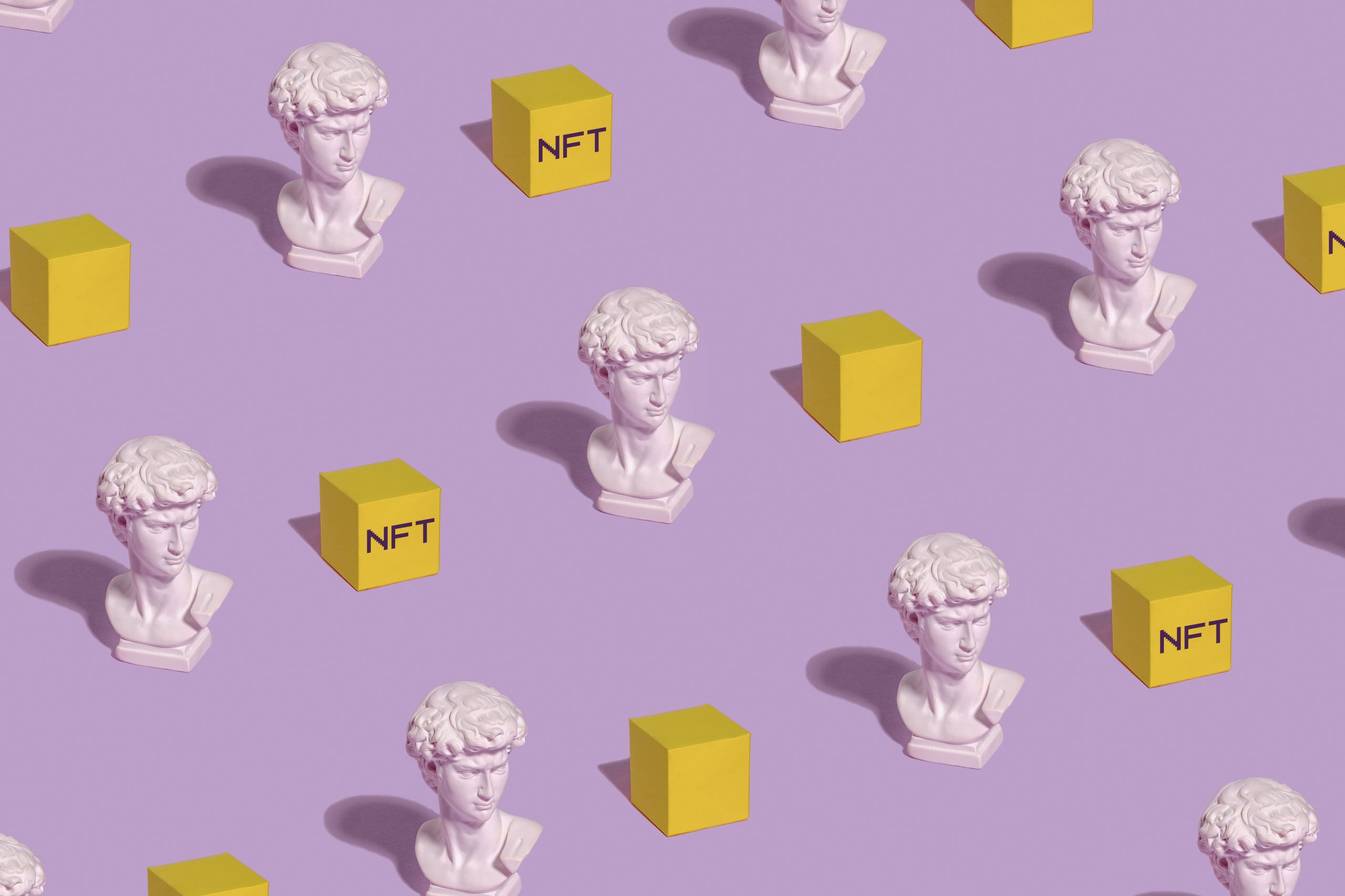
What exactly is an NFT?
NFT’s have gotten a lot of hype lately. But what exactly is an NFT? Let’s break it down.

NFT stands for “Non-fungible Token.” This can be considered a digital asset.
The word “fungible” means something that can be traded for something else of equal value. So, in this case “non-fungible” means that there is not something with equal value. There is only one uniquely like it. Many of the world’s most valuable items such as the Mona Lisa or the Statue of David are considered “non-fungible.” There is only one.
When we look on the other hand, for example, we have cryptocurrencies, such as Bitcoin, which are “fungible” tokens, meaning each Bitcoin has the same value, therefore one Bitcoin can easily be traded with another Bitcoin. When you have an NFT, it can be bought and sold but there is nothing that is of equivalent value that could easily be traded with it.
Then we have the word “token.” Being a token means it is unique and there is nothing like it. When something is tokenized that means it’s attached to a digital certificate of ownership, and is uniquely its own thing.
What is the blockchain?
In order to better understand how NFT’s work, it is important to have an understanding of the blockchain as well.
A blockchain is a database that stores digital information chronologically. This is decentralized which means the control is spread out across different authorities instead of by one. This allows people to make transactions directly with each other instead of relying on a middleman such as a bank. Every transaction you make on the blockchain goes onto a public ledger so there is proof of whatever exchanges were made.
So, when you buy your NFT, you won’t have a physical asset proving ownership, but the proof of your ownership is recorded on the blockchain.
So why would you want an NFT anyway?
Just like any other collectible, your NFT might raise in value the longer you hold onto it. That means one day, you could potentially sell it and make money.
The other thing that NFTs sometimes have are “utilities.” These are special “real world” perks that come with your NFT. This could be access to events, discounts, special communities, etc. As a holder of that particular NFT, you have access to its utilities. You may not care about the digital asset itself, but you may want to hear your favorite media icon speak at a conference. It could give you that special opportunity.
Whatever your motive is, it’s definitely worth it to take advantage of this new form of collectibles.
Que es un NFT?
¿Qué es exactamente un NFT?
Los NFT han recibido mucha publicidad últimamente. Pero, ¿qué es exactamente un NFT? Vamos a desglosarlo.
NFT significa "token no fungible". Esto puede ser considerado un activo digital.
La palabra “fungible” significa algo que se puede intercambiar por otra cosa de igual valor. Entonces, en este caso, “NO fungible” significa que no hay algo con el mismo valor. Sólo hay uno único como él. Muchos de los artículos más valiosos del mundo, como la Mona Lisa o la Estatua de David, se consideran "no fungibles". Sólo hay uno.
Cuando miramos por otro lado, por ejemplo, tenemos criptomonedas, como Bitcoin, que son tokens "fungibles", lo que significa que cada Bitcoin tiene el mismo valor, por lo tanto, un Bitcoin se puede intercambiar fácilmente con otro Bitcoin. Cuando tiene un NFT, puede comprarlo y venderlo, pero no hay nada que tenga un valor equivalente que pueda intercambiarse fácilmente con él.
Luego tenemos la palabra "token". Ser un token significa que es único y no hay nada como eso. Cuando algo se tokeniza, eso significa que está adjunto a un certificado digital de propiedad y es únicamente propio.
¿Qué es el blockchain?
Para comprender mejor cómo funciona NFT, es importante comprender también la cadena de bloques (blockchain).
Una cadena de bloques es una base de datos que almacena información digital cronológicamente. Esto está descentralizado, lo que significa que el control se distribuye entre diferentes autoridades en lugar de una sola. Esto permite que las personas realicen transacciones directamente entre sí en lugar de depender de un intermediario como un banco. Cada transacción que realiza en la cadena de bloques se registra en un libro público, por lo que hay pruebas de los intercambios que se realizaron.
Entonces, cuando compre su NFT, no tendrá un activo físico que pruebe la propiedad, pero la prueba de su propiedad se registra en la cadena de bloques.
Entonces, ¿por qué querrías un NFT ?
Al igual que cualquier otro coleccionable, su NFT podría aumentar de valor cuanto más tiempo lo conserve. Eso significa que algún día, potencialmente podrías venderlo y ganar dinero.
La otra cosa que a veces tienen los NFT son "utilidades". Estos son beneficios especiales del "mundo real" que vienen con su NFT. Esto podría ser acceso a eventos, descuentos, comunidades especiales, etc. Como titular de ese NFT en particular, tiene acceso a sus utilidades. Es posible que no le importe el activo digital en sí, pero es posible que desee escuchar a su ícono de medios favorito hablar en una conferencia. Podría darte esa oportunidad especial.
Cualquiera que sea su motivo, definitivamente vale la pena aprovechar esta nueva forma de coleccionables.